FAQ
Bali helicopter FAQ with 40 answers: cost from $450 per helicopter, weight, kids, rain, villa landings, Lombok and Gili. Ask us on WhatsApp for a quote.
This helicopter glossary for Bali explains 31 terms you see on a quote, at the helipad and in the weather briefing, from flight hour and standby to VFR, AOC and Nyepi. Each entry says what the word means for your price, your seat or your date. Flights start at $450 for the whole helicopter, and a fixed quote follows your WhatsApp message the same day.
Quotes, pads and weather briefings use aviation words that never appear in a hotel brochure. This glossary explains the ones you will see when you book a private helicopter in Bali, in the order they come up: first the booking, then the aircraft and the pad, then the sky and the day itself.
Each entry is short and written for travellers, not pilots. Where a term changes your price, the number is shown; where it changes your plan, a link leads to the page that explains it. For practical questions, open the Bali helicopter FAQ. For rates, see the price page.
The unit used to price a charter: one hour of the helicopter flying, from lift-off to landing. It is $2,300 for the 4-seat class and $3,300 for the 6-seat class. Shorter flights are priced by the minute at a similar rate; see the price page.
Time the helicopter waits on the ground for you at a landing site, for a picnic, a ceremony or a meeting. It is billed apart from flight time, at $300 per hour.
An empty flight without guests, made to reach you or to return to base after dropping you off. It is why a one-way transfer costs nearly as much as a return trip.
The fare for a flight from A to B that already includes the helicopter's empty flight back. Airport to Ubud, for example, is $1,300. The route list shows more.
Out and back on one date, with the helicopter waiting at the far end. The price is the one-way figure plus standby; airport to Ubud and back with one hour of waiting is $1,600.
Our written reply on WhatsApp: aircraft class, pad, route, flight minutes, extras and one fixed price for your date. Guide prices on the website are estimates; the quote is the figure you pay.
A part payment that holds your slot. The amount and the payment method come with the quote, and nothing is paid on this website.
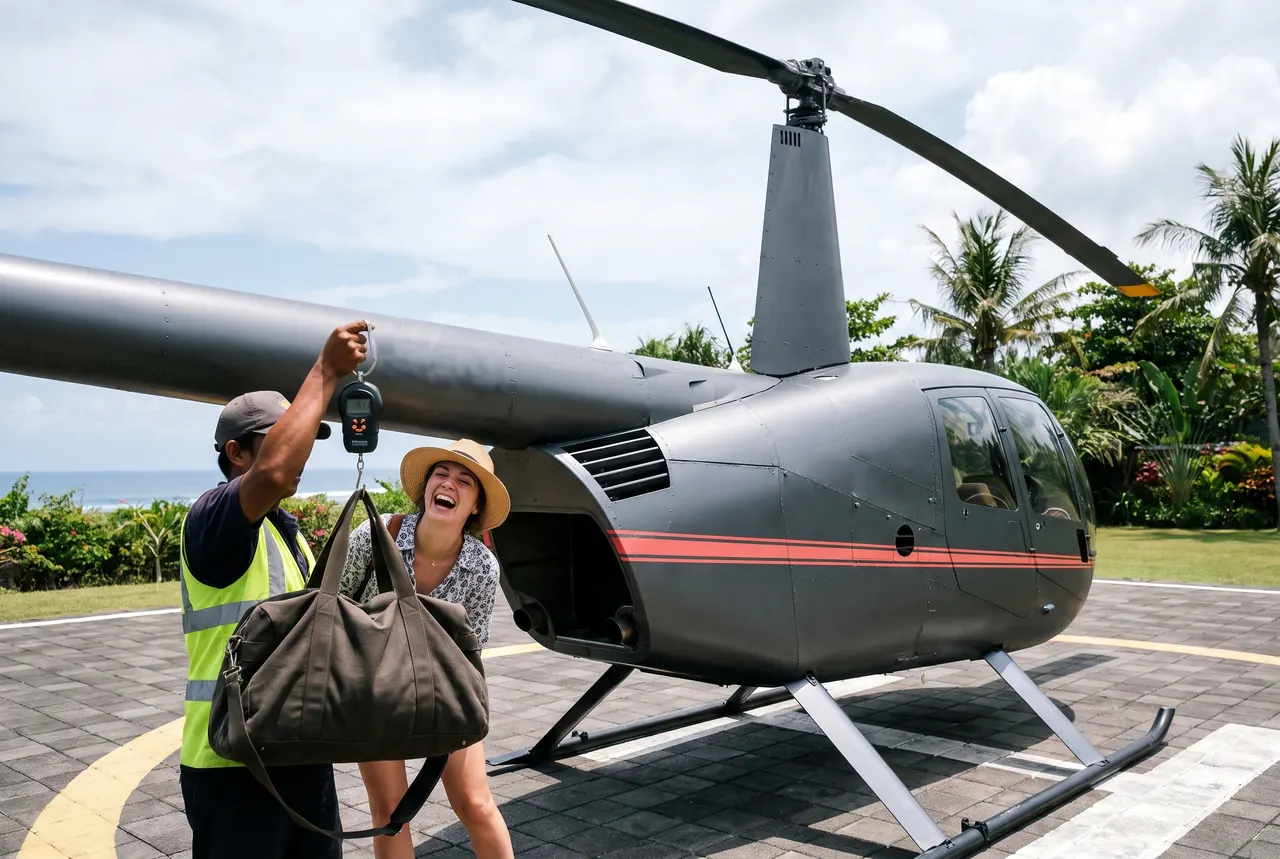
The total weight a helicopter can carry on a given flight: pilot, guests, bags and fuel. Bali's heat lowers it, which is why we ask for rough weights. Details are in weight limits and baggage.
A group of helicopters with a similar seat count and price level: the 4-seat class for up to 4 guests, the 6-seat class for up to 6 at about 1.4 times the rate, and two helicopters for 7–8 guests. See helicopter classes.
A charge made by an airport, hotel or venue for letting a helicopter land on its site. It is added at cost and written in the quote wherever it applies.
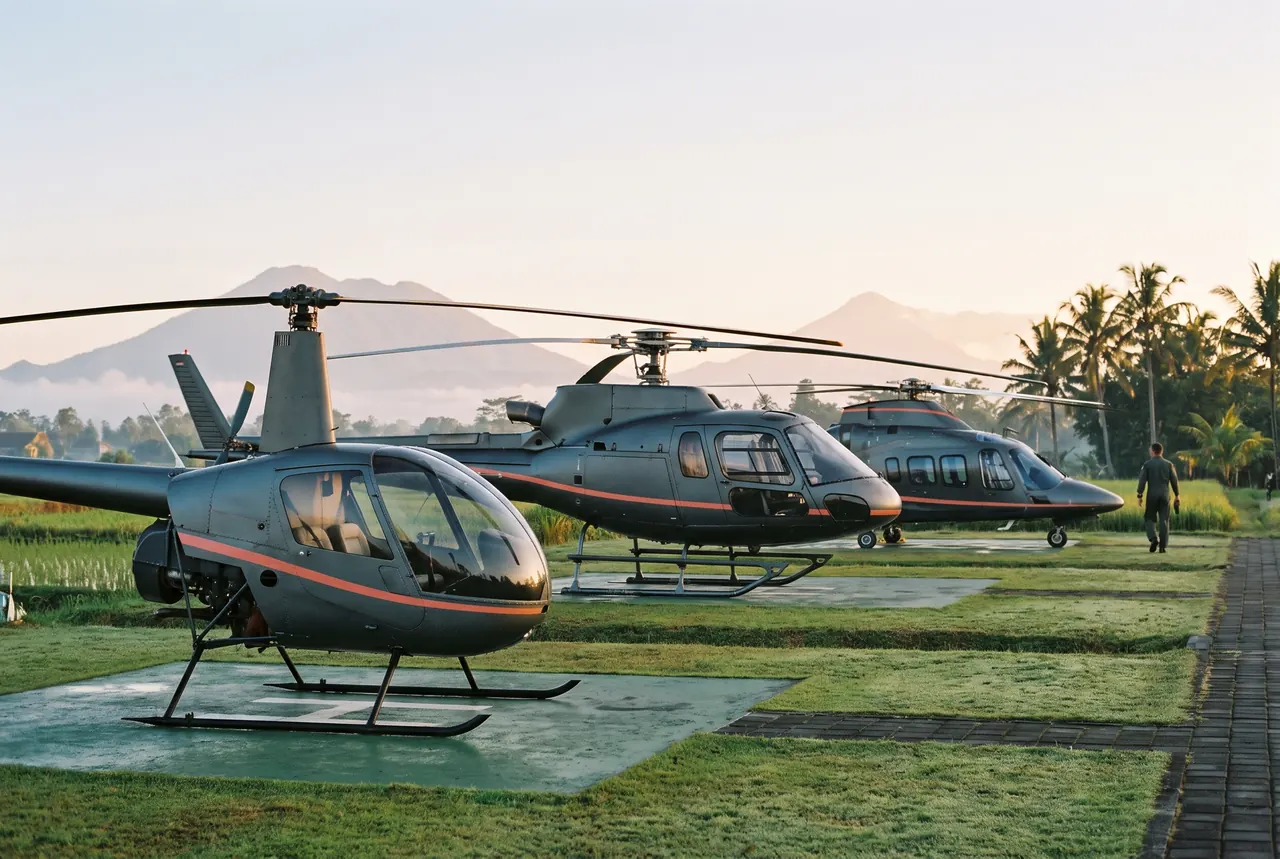
A prepared surface for helicopters to land on, usually a marked paved square or circle with an H. Most south Bali flights lift off from a helipad on the Bukit peninsula, and the quote names the exact pad.
Short for final approach and take-off area: the clear, flat patch where the helicopter comes down and lifts off. For a light helicopter, think of roughly 25–30 m across, with no loose items, overhead lines or tall trees close. See landing at a villa or hotel.
The two tubes under a light helicopter that work as landing gear instead of wheels. Step up carefully, and let the crew show you where to put your feet.
The strong downward and outward airflow from the spinning main rotor. It lifts dust, hats, towels and loose cloth, which is why we ask you to leave hats and scarves behind. See what to wear.
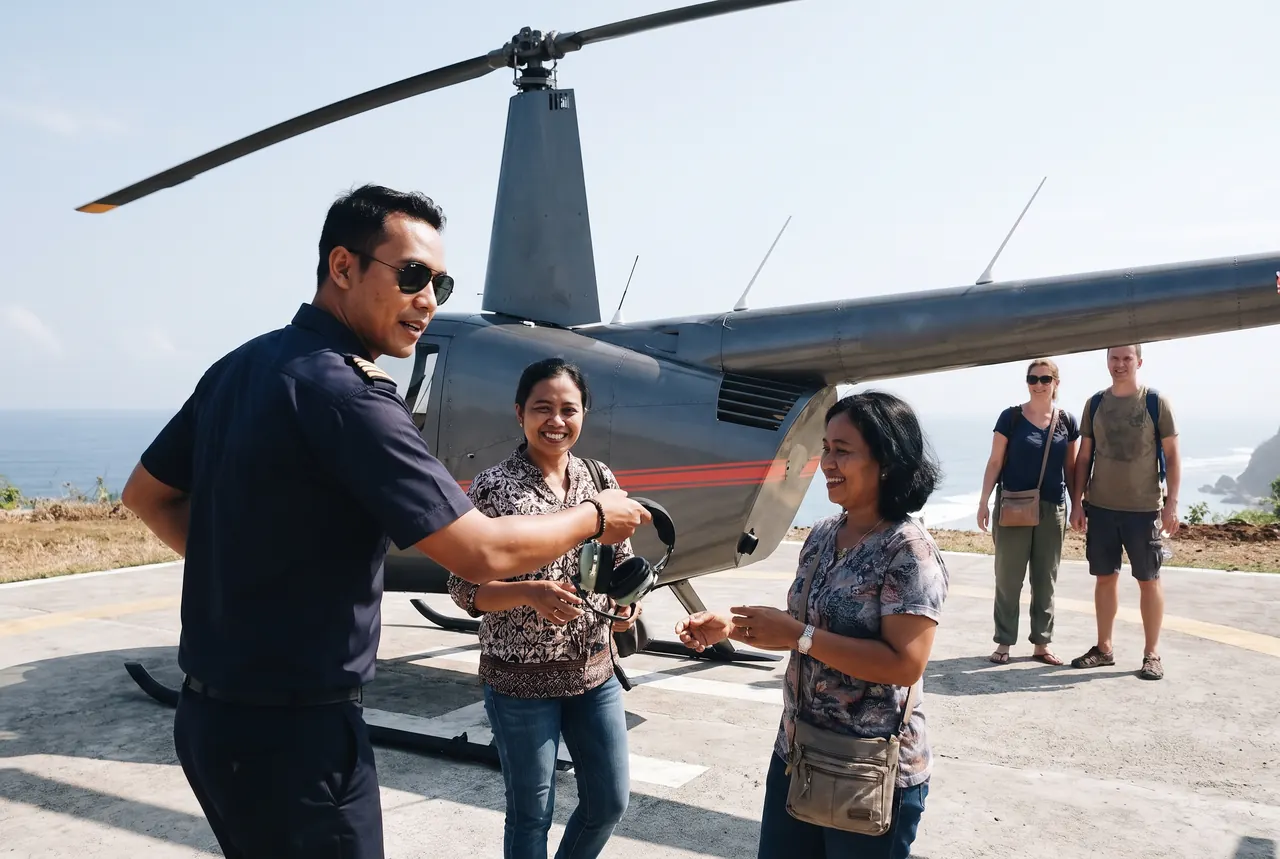
Ear defenders with a microphone that every guest wears. They cut engine noise and let you talk with the pilot and with the other guests.
The small hold of the helicopter, usually behind the cabin. It takes soft bags only, within the weight limit for the flight.
A single-engine helicopter has one engine, a twin-engine helicopter has two. Most tourist flights in Bali use single-engine light helicopters; twin-engine aircraft serve offshore, medical and VIP work and are booked by quote.
Two engine types. A piston engine works much like a car engine and powers lighter helicopters such as the Robinson R44. A turbine is smoother and copes better with heat, and drives the R66, H125, Bell 407 and H130.
The small rotor at the end of the tail that stops the helicopter from spinning against its main rotor. Never walk towards the tail; follow the path the crew points out to the cabin door.
A unit of speed equal to one nautical mile per hour, about 1.85 km/h. Light helicopters cruise at roughly 110–135 knots, which is about 205–250 km/h.
Flying by looking outside, which needs enough visibility and clearance from cloud. Our flights are day VFR only: from sunrise to sunset, in weather the pilot accepts, and never at night.
The licence that lets a company carry passengers for hire. In Indonesia, passenger flights must be operated by a licensed air operator, so the aircraft and pilot we book for you belong to an AOC holder. Ask for the name and number with your quote; see what to ask an operator.
The service that directs aircraft near airports and in controlled airspace. Routes near Ngurah Rai Airport are cleared with ATC, which can change a route or delay a take-off.
The hour of low, warm light before sunset. A golden-hour flight is timed to end at sunset, with take-off about 20–30 minutes earlier. See sunset helicopter flights.
The height of the lowest cloud layer above the ground or sea. When cloud sits on the hills, the pilot cannot fly through it, so mountain and volcano routes can close in the afternoon, most often in the wet season.
How far you can see horizontally. Haze, rain and smoke reduce it, and below the pilot's limit the flight waits or the route changes.
A notice to pilots about a temporary hazard or closure in the airspace, such as a restricted area, an event or volcanic activity. The operator checks it before the flight.
An alert level rates how active a volcano such as Agung, Batur or Rinjani is, and an ash advisory warns pilots of ash in the air. At higher levels routes near the crater close, because ash wears engines and windscreens. See volcano flights and ash advisories.
Bali's Day of Silence, normally in March. Ngurah Rai Airport closes for about 24 hours and the island stays quiet, so no sightseeing flights run. Read Nyepi Day: can you fly before choosing dates.
The pilot's decision, before and during the flight, on whether weather, load and landing site are acceptable. It is final. On a no-go we move the flight or refund the part not flown.
The minutes from lift-off to landing on one leg. Our flight-time figures are airborne time: the Bukit to Ubud leg is 14–20 min. On the pad, add 15–20 minutes for check-in, the briefing and shutdown.
A helipad is the landing surface itself: a marked, flat, usually paved square or circle. A heliport is a larger facility that adds buildings, fuel or hangars to one or more pads. Most south Bali flights lift off from a helipad on the Bukit, and the quote names the exact pad; see villa and hotel landings.
The flight time counts only the minutes in the air on one leg. Allow 15–20 more minutes on the pad for check-in, weights, the safety briefing and shutdown. The 12-minute Bukit flight therefore takes about half an hour door to door.
Because weight, not seat count, decides which class can fly your route in Bali's heat. Rough numbers sent privately on WhatsApp are enough, and we place the group in a class with a margin. The class then sets the hourly rate: $2,300 for the 4-seat class and $3,300 for the 6-seat class.
No. A golden-hour flight ends at sunset, because helicopters here fly by day under visual flight rules only. Sunset falls between about 18:05 in June and 18:40 in late December. Dinner after dark happens on the ground; see the helicopter picnic and dinner plan.
Yes, ask when you request the quote. A licensed operator is used to the question, and the number lets you check the operator before you pay. The about page explains how we work with the operator.
Tell us the flight you want, the date and how many people are flying. We reply on WhatsApp the same day with the aircraft class, the pad and one fixed price. Nothing is paid on this website.
Get My Quote on WhatsAppBali helicopter FAQ with 40 answers: cost from $450 per helicopter, weight, kids, rain, villa landings, Lombok and Gili. Ask us on WhatsApp for a quote.
Which helicopter flies your Bali charter: 4-seat class (up to 4 guests), 6-seat class and two-helicopter groups, with seat counts for R44, R66, H125, Bell 407.
Bali helicopter prices for 2026: scenic flights from $450, charter $2,300 per flight hour, island transfers by flight time. Whole-helicopter USD rates.
Twelve practical questions to ask any Bali helicopter operator, the red flags to watch for, and what we do on the booking side.
Why weight is the limit in Bali heat, how we ask for weights, soft bags only, and what happens if the group is heavy.