Uluwatu Helicopter Tour
From $650 · whole helicopter
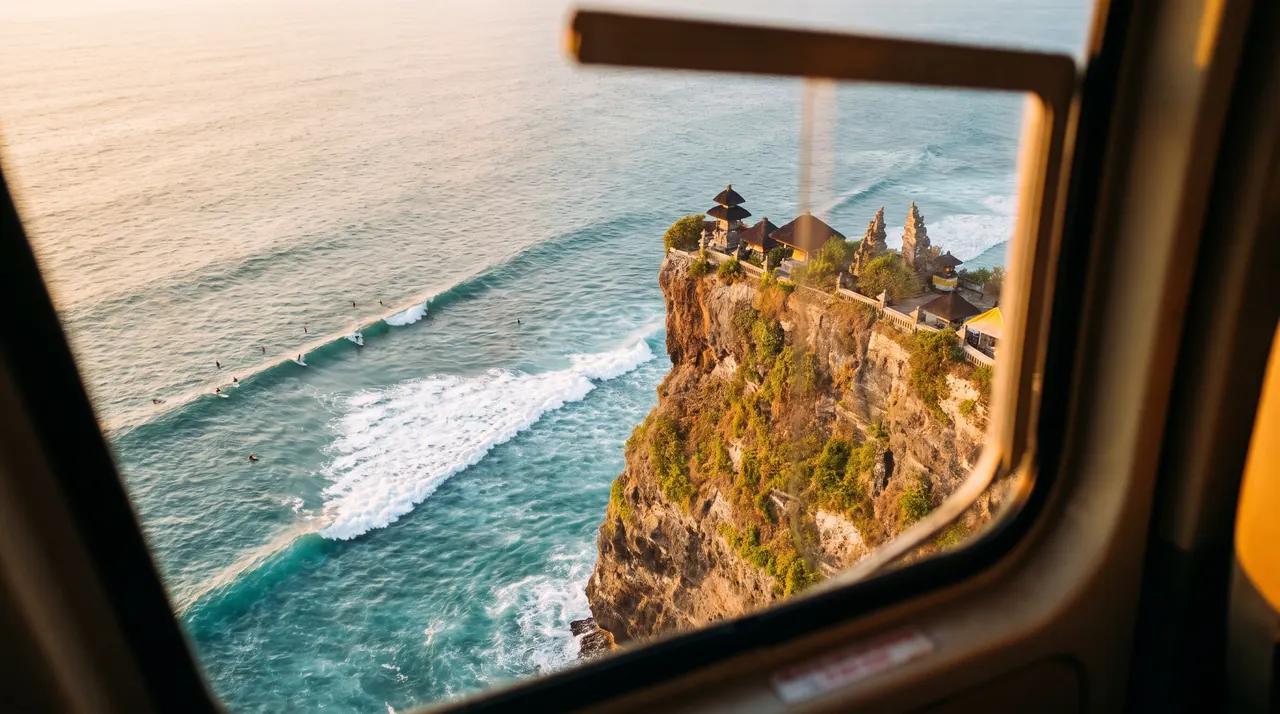
18 minutes along the Bukit cliffs: Uluwatu Temple, the Suluban and Padang Padang surf breaks, Bingin and Balangan, then Jimbaran Bay.
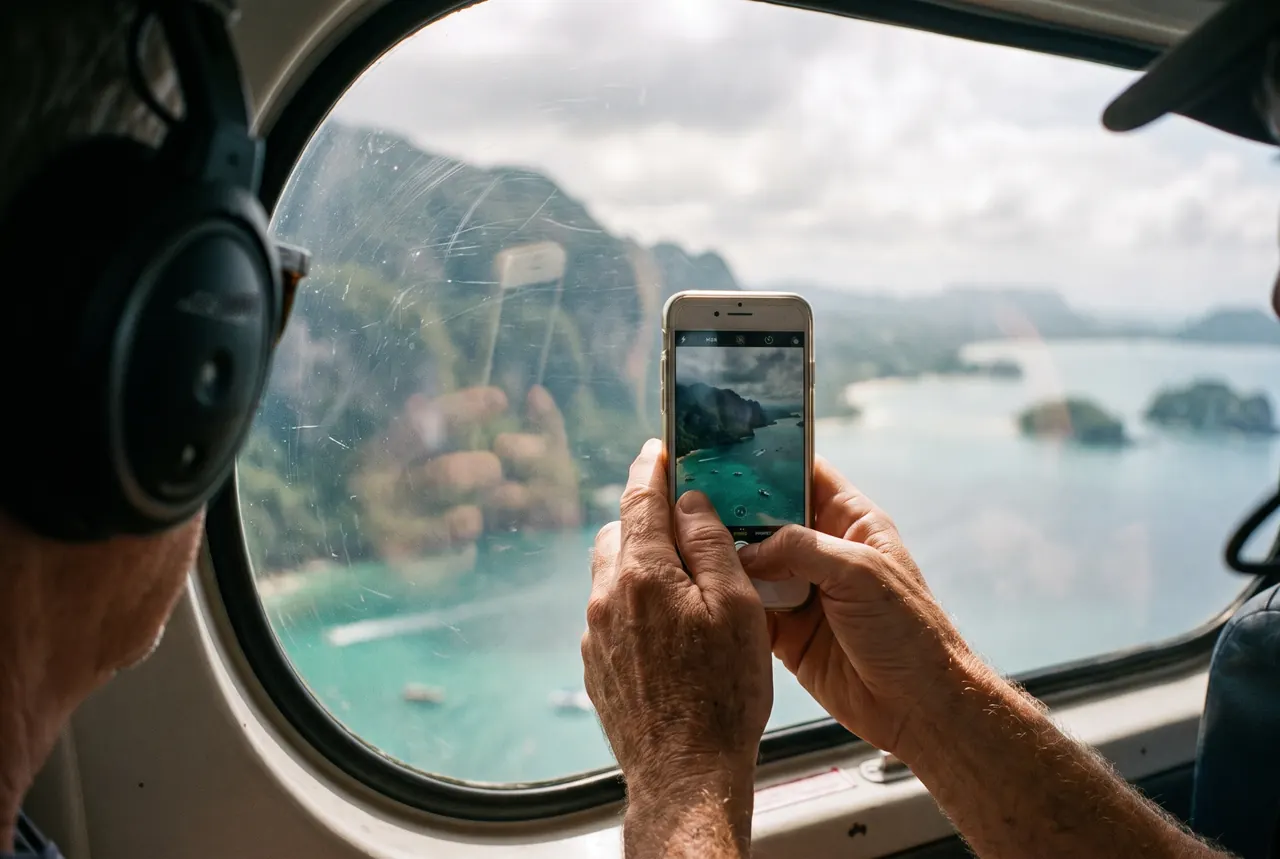
Photographing from a helicopter in Bali means shooting through closed windows, so wear dark clothes to cut reflections, keep the lens close to the glass, use a shutter speed of 1/1000 s or faster and pick the seat on the lit side of the route. A 12-minute Bukit flight is $450 for the whole helicopter, and a golden-hour flight is timed to land at sunset. Below you get phone and camera settings, seat and light advice by time of day, and video tips.
If you read nothing else, read these. Each one is explained further down.
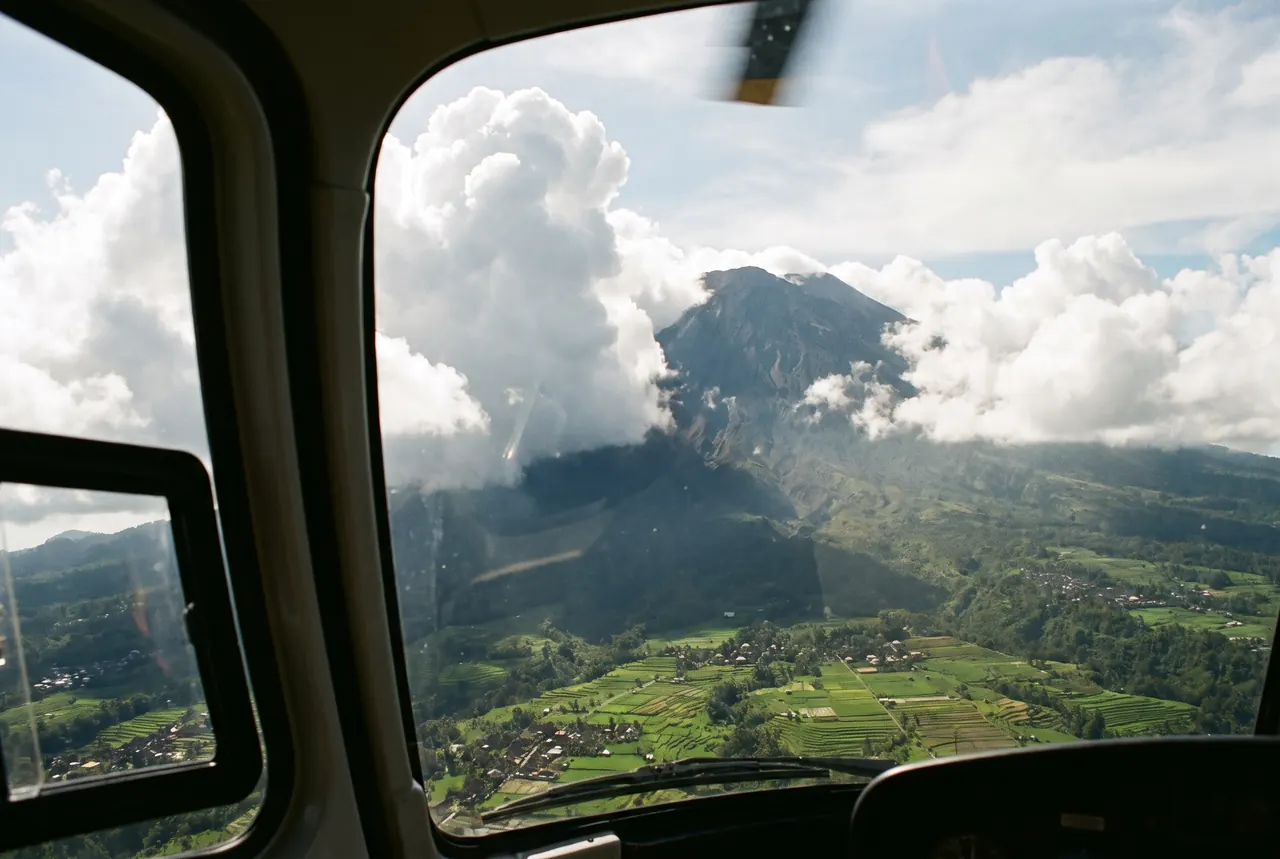
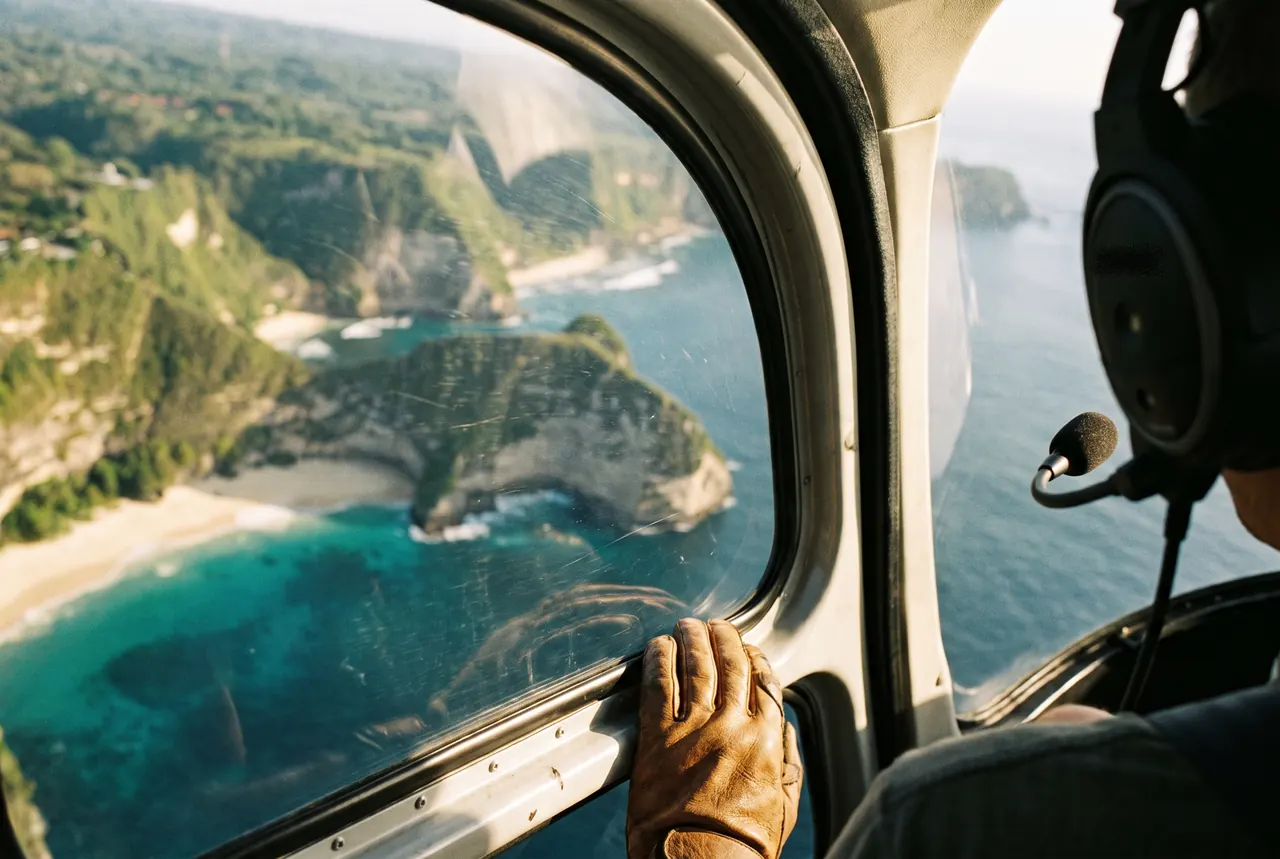
Windows stay shut in flight, and the aircraft flies with the doors closed, so every photo goes through a layer of glass or acrylic. That glass will have small scratches and a slight tint. Do not wipe it yourself; the ground crew cleans it before the flight, and a dry cloth can add scratches.
Reflections are the main enemy. They come from your own clothes, your phone screen and the bright cabin interior. Dark clothes help most. A dark jacket or a hand held round the lens works as a hood, and a lens hood does the same on a camera. Keep the lens a few millimetres from the glass so no vibration passes into it.
Skip a polarising filter. On a plastic window it can show rainbow stress patterns, and it cuts the light you need at a fast shutter speed. Skip flash too, because it lights the glass and ruins the shot.
| Setting | Phone | Camera |
|---|---|---|
| Lens | Main wide lens; the ultra-wide only for cliffs and coast lines | A wide to standard zoom; long lenses show vibration and haze |
| Shutter speed | Let it run auto in bright light; avoid night mode | 1/1000 s or faster; raise ISO before you slow the shutter |
| Focus | Tap a distant landmark, then lock focus and exposure | Single-point autofocus on the landmark, then recompose |
| Exposure | HDR on; tap the sky and drop the exposure a little | Expose for the highlights; RAW lets you lift shadows later |
| Burst | Hold the shutter for a burst when passing a landmark | Continuous shooting; pick the sharpest frame later |
| Stabilisation | Keep it on; hold the phone with both hands | Turn lens stabilisation on, and rest elbows against your body |
Do not use digital zoom on either. Step the framing in your edit instead. The 12-minute Bukit flight ($450) passes its landmarks quickly, so set up before lift-off.
The rule is simple: sit on the side that faces away from the sun, unless you want silhouettes. In most light helicopters the pilot sits in the right front seat, and the operator sets the seating to balance the weight, so ask but do not expect to choose.
| Time of day | Where the sun is | What it gives you |
|---|---|---|
| 07:00–10:00 | Low in the east | The side away from the sun is lit: crisp volcano slopes at Batur, rice terraces at Ubud. The sun side gives rim light and glare. |
| Midday | High overhead | Flat light, but the best colour in reef water at Nusa Penida and Lembongan. |
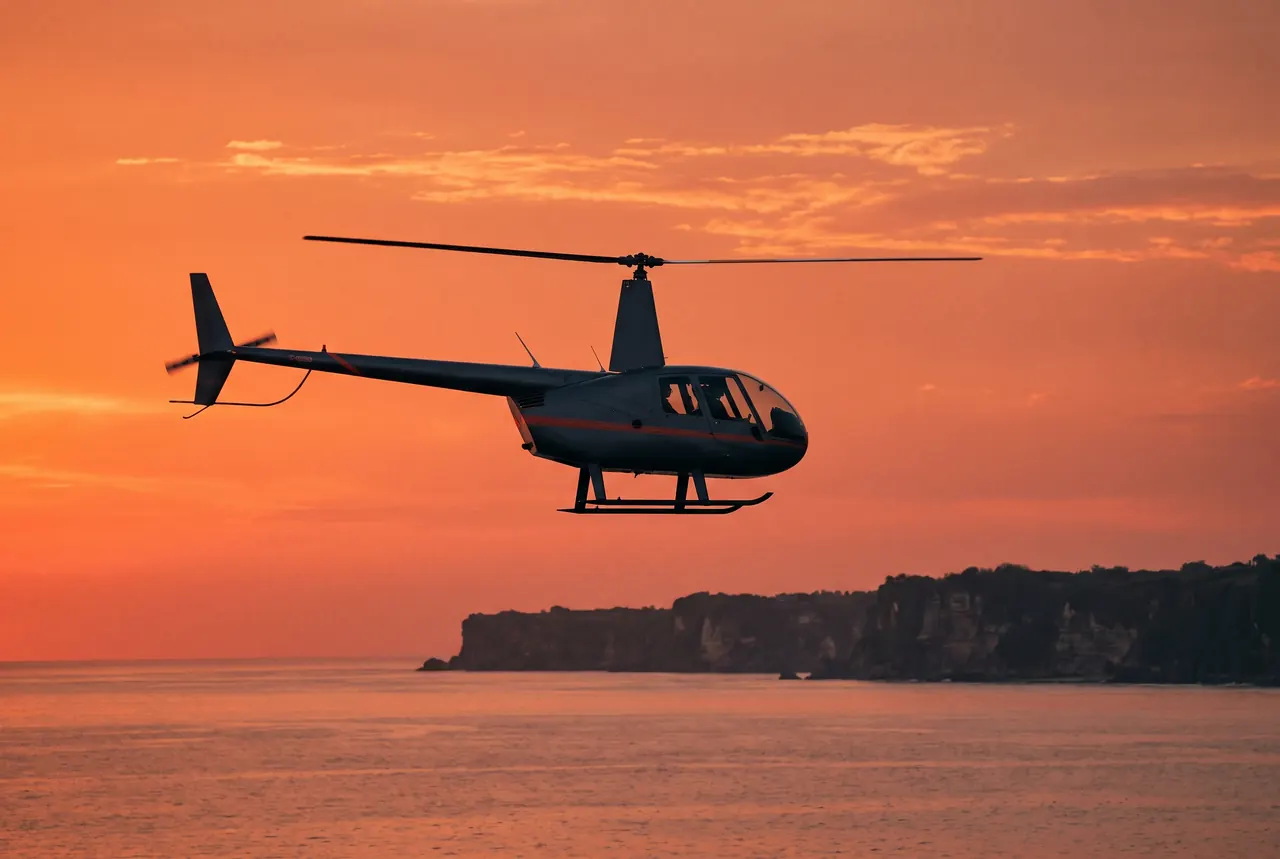
| Golden hour | Low in the west, ends at sunset | Warm light on the Bukit cliffs and Uluwatu Temple. The sun side gives silhouettes and glitter on the sea. |
On an out-and-back route such as the cliffs from Ungasan to Uluwatu, the coast is on one side outbound and the other side on the way home. Ask the pilot at the briefing and swap places with a friend if there is room. See the Uluwatu tour and the Ubud tour for the landmarks in order.
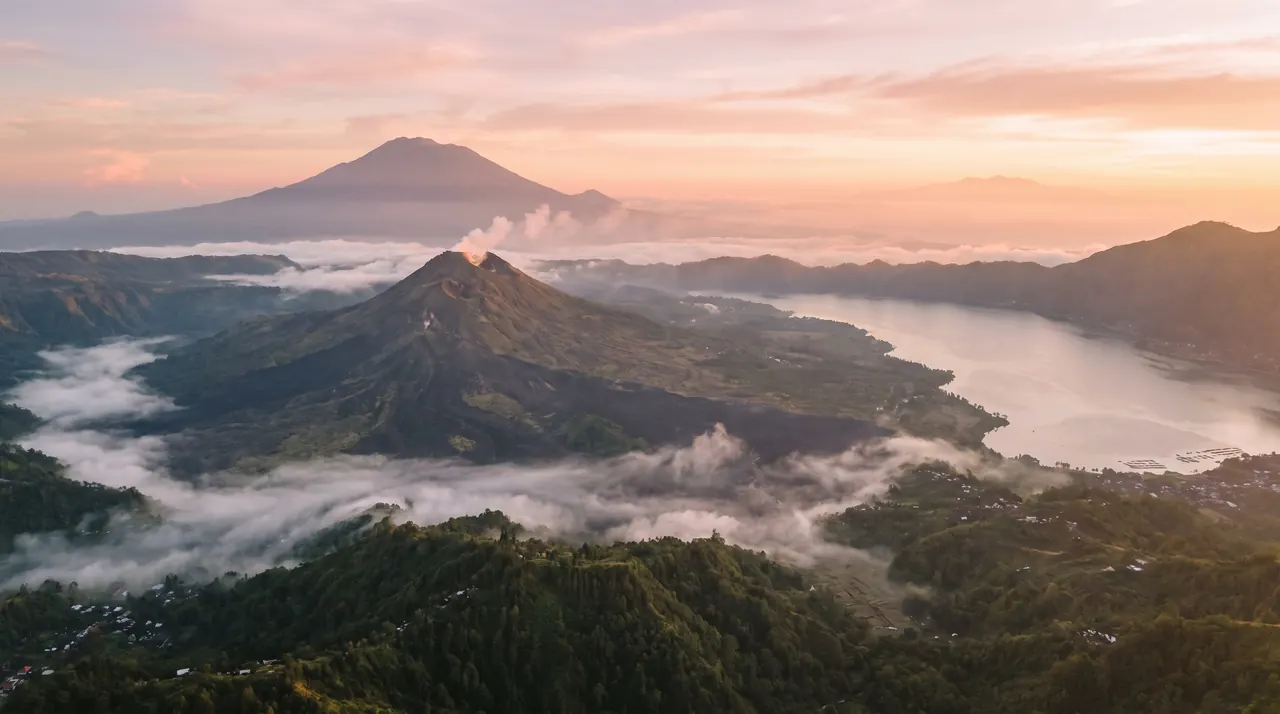
Sunrise in Bali is about 05:50 in December and about 06:35 in June and July, and flights run from sunrise to sunset. For volcanoes, rice terraces and the Ayung gorge, fly between 07:00 and 10:00, when Batur and Agung are usually clear before cloud builds. On the Mount Batur tour the crater lake and the caldera edge are sharpest early.
For the coast, book the last hour before sunset. Sunset falls at about 18:05 in June and about 18:40 in late December, and a golden-hour flight lifts off 20 to 30 minutes before. The sunset flight costs from $750 for the whole helicopter. We do not fly at night, so the flight ends at sunset and the dusk shots happen from the pad.
The dry season from April to October gives the clearest air, but the wet season has strong skies in the morning. Our best time to fly guide compares the months.
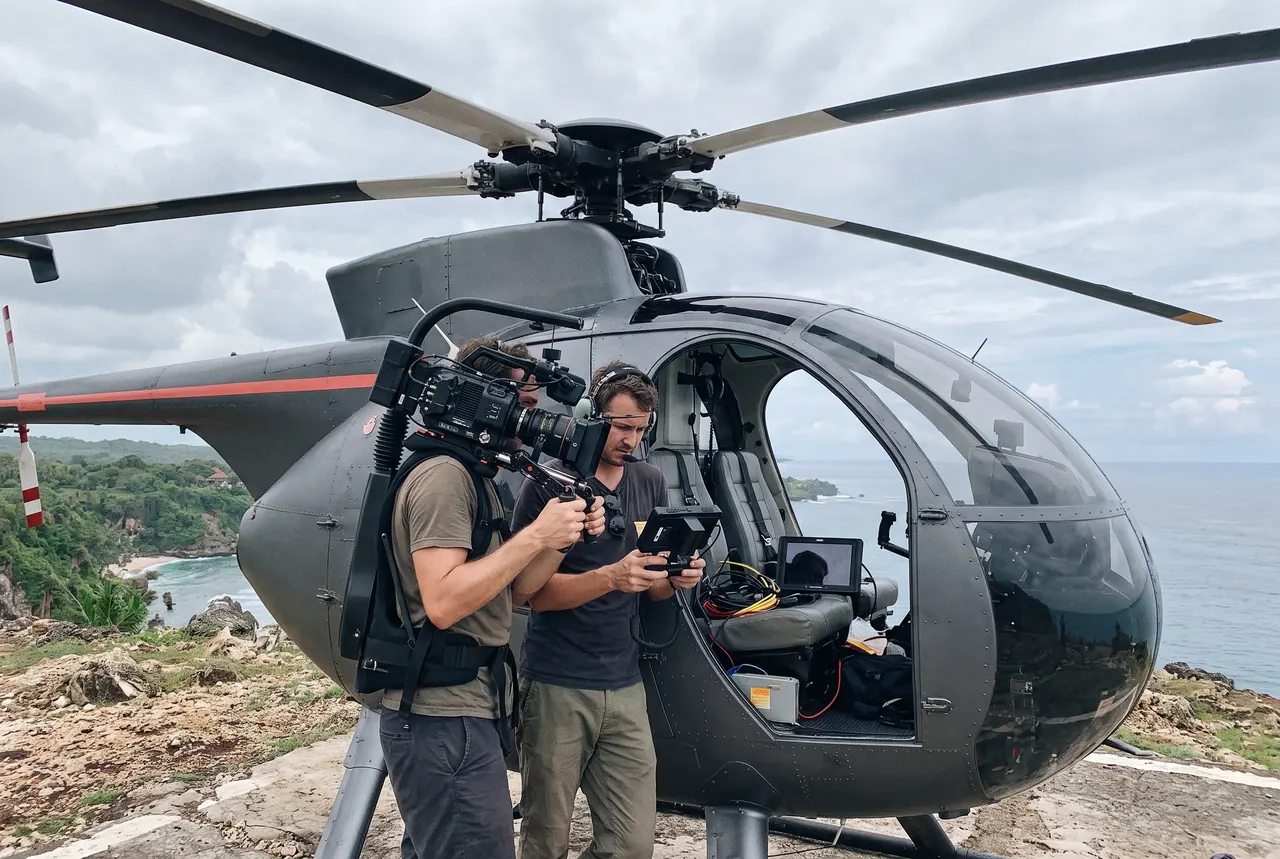
If you want footage of the helicopter itself in the air, you need a second aircraft or a ground crew. A cabin camera only sees what is outside the window.
No. Windows stay shut in flight, so you shoot through the glass. Dark clothes, a lens close to the window and no flash give the cleanest result.
Use 1/1000 s or faster. The aircraft vibrates and moves, and slower speeds blur the frame. On a phone, shoot in bright light and let the camera run on auto.
The front seat next to the pilot has the widest view, but the operator sets the seating to balance the weight. Choose the side away from the sun if you can, and ask the pilot which side the landmark will be on.
Ask first. A tripod and a selfie stick are not suitable in a small cabin. Small cameras on a strap are normal; anything clipped to the aircraft needs the pilot's approval.
From 07:00 to 10:00 for volcanoes and rice terraces, and the last hour before sunset for the coast and Uluwatu. A scenic flight from $450 fits either slot; read the Bukit tour for the landmarks.
Yes. A ground photographer is $250 and a ground drone is $300. They shoot the arrival and the departure from the pad, since there is no room in the cabin for a second camera person.
Send the date, the guests and what you want to photograph: volcanoes, terraces, cliffs or the coast at sunset. We reply the same day with the route, the take-off time and a fixed price.
Get My Quote on WhatsApp18 minutes along the Bukit cliffs: Uluwatu Temple, the Suluban and Padang Padang surf breaks, Bingin and Balangan, then Jimbaran Bay.
30 minutes over the Batur caldera, its crater lake and the Kintamani rim, with the Tegalalang terraces on the way. Mornings, in clear air.
A golden-hour flight over the Bukit cliffs that lands at sunset. 18 or 30 minutes, whole helicopter, up to 4 guests.
Hourly helicopter charter for photo, video and film crews, with a camera operator seat, planned light and a shot list agreed with the pilot.
Which hour, which month and which season suit a Bali helicopter flight, with sunrise, sunset and golden-hour take-off times.
A short packing list: clothes, shoes, hats, bags, phone straps, kids, nervous flyers and what is not allowed in the cabin.