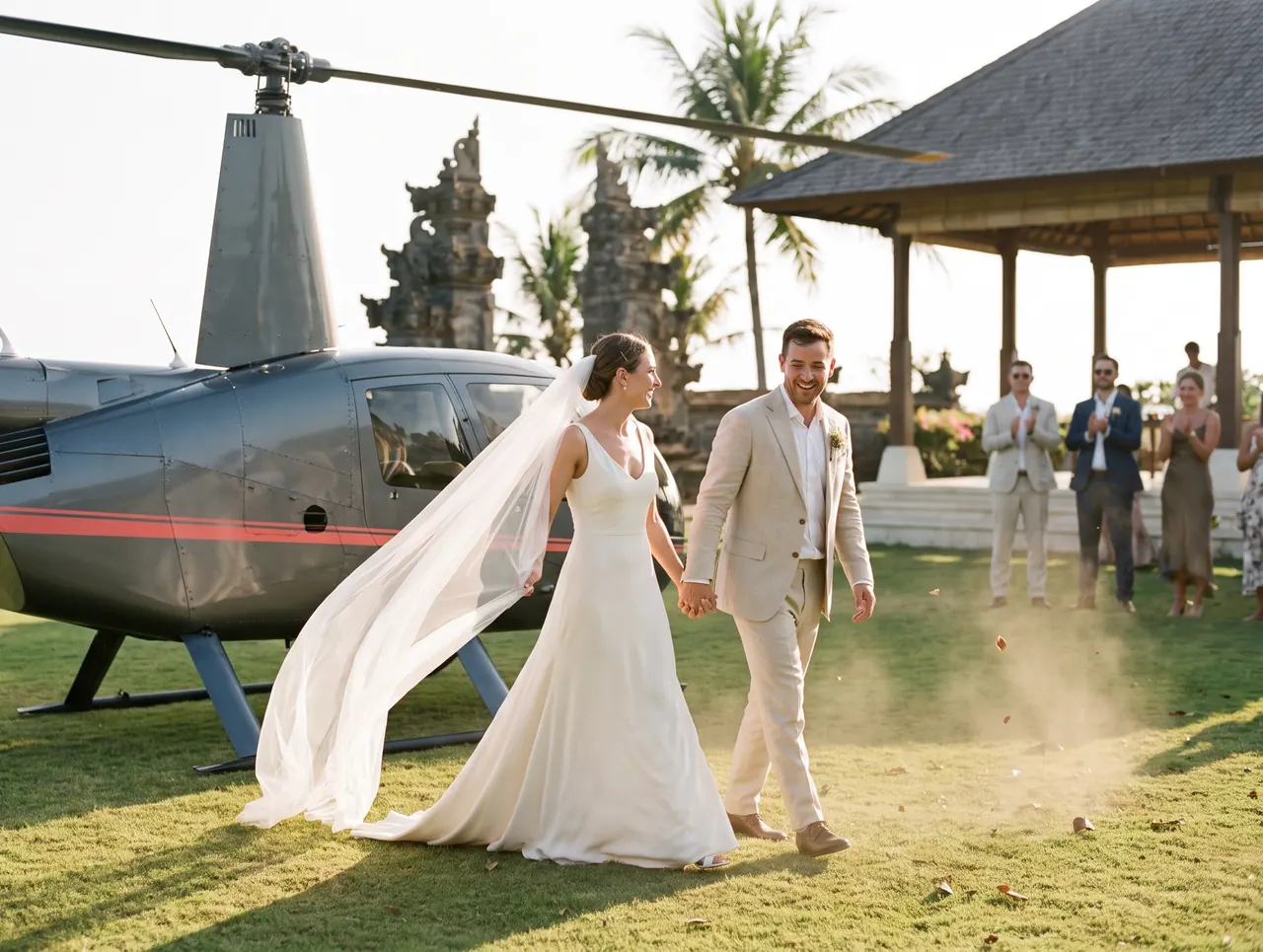
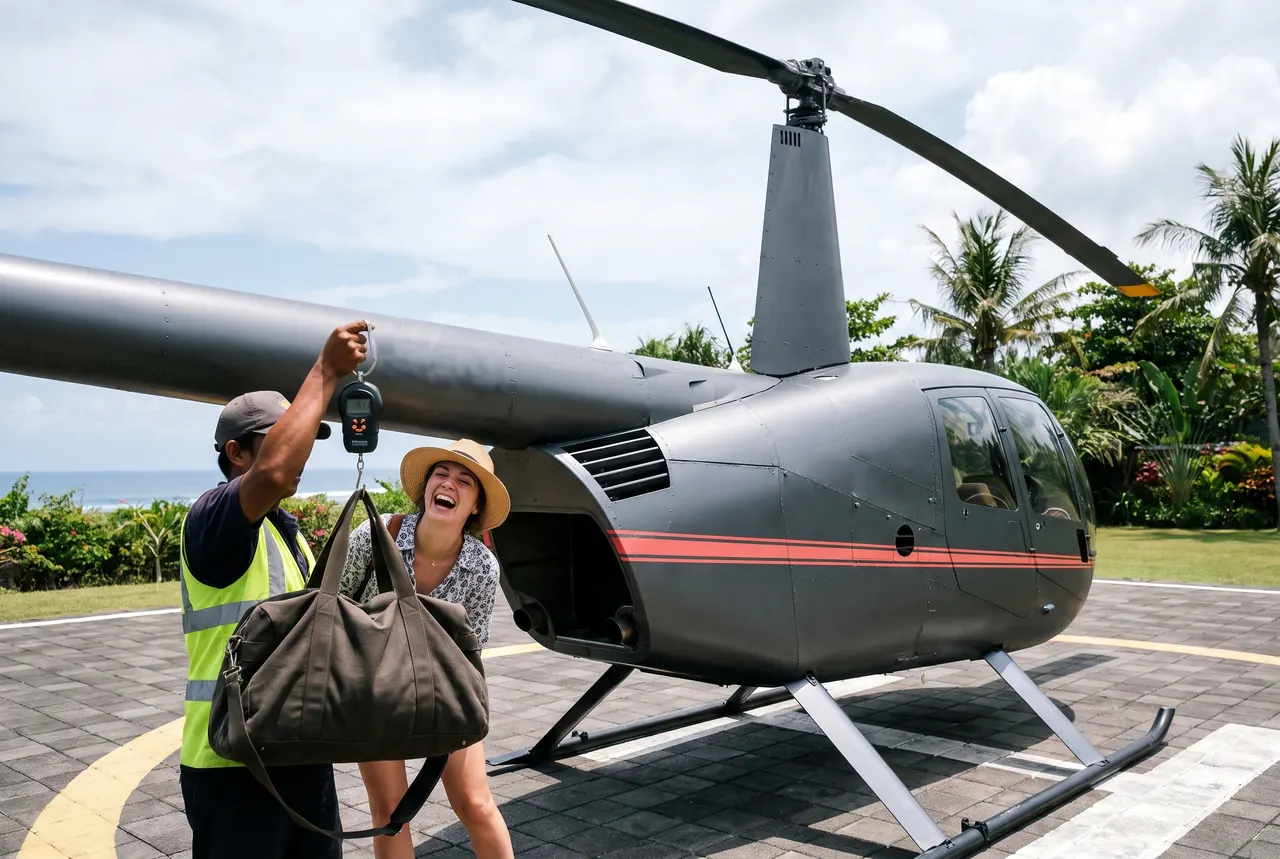
Helicopter Landing at a Villa or Hotel
Site check first · flight priced by quote
How landing at a villa or hotel works: the 25–30 m clear area, owner consent, operator clearance, and a nearby pad plus car when the site cannot take one.
A helicopter can land at a villa in Bali only on an approved site: a clear, flat area roughly 25–30 m across, with no loose items, no overhead lines and no tall trees close, plus the owner's agreement and the operator's clearance. We check the site from your map pin and photos before you pay. If the villa does not qualify, we land at a nearby approved pad and add a private car, from $50. Send the pin and four photos on WhatsApp to start.
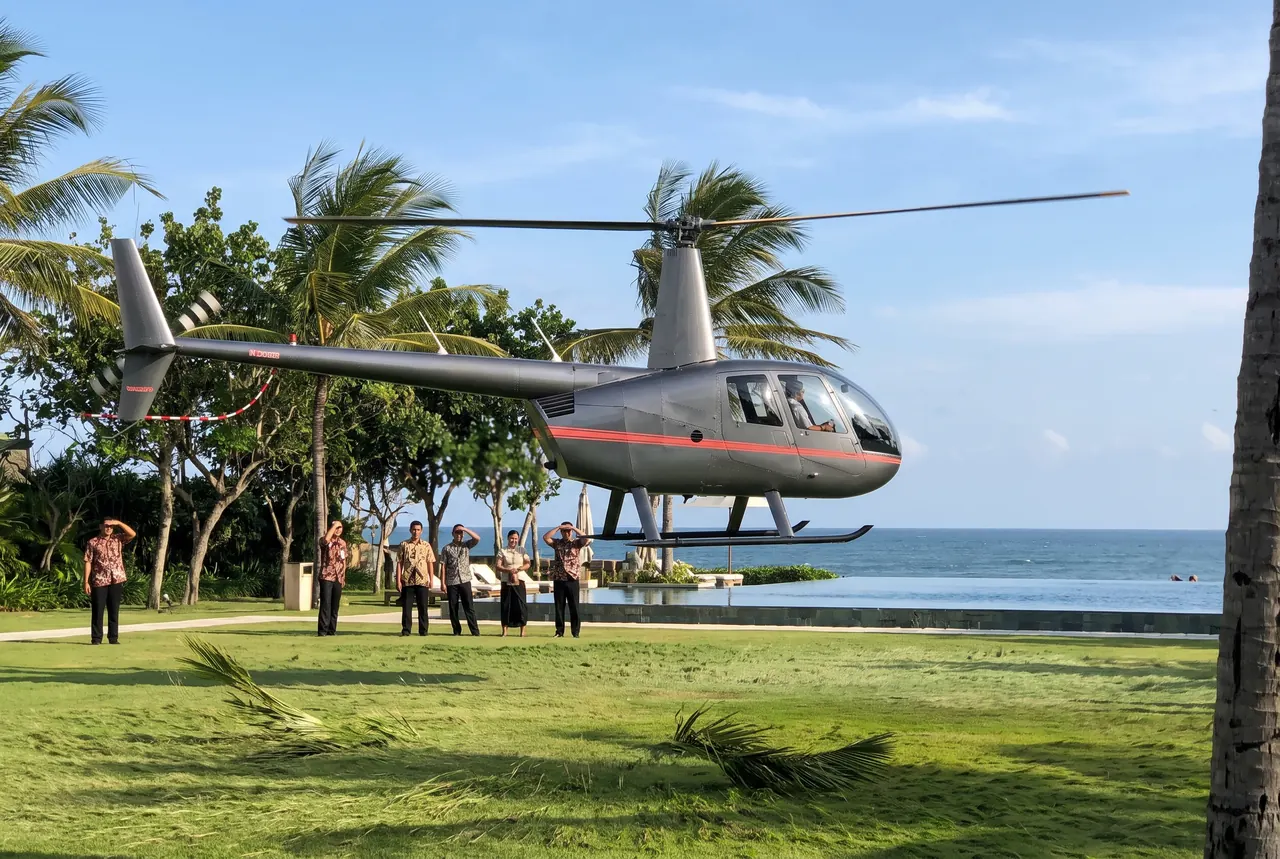
Sometimes. A light helicopter needs a clear flat patch of roughly 25–30 m across, an open path in and out, and nothing loose that the rotor wash can lift. On top of that, the landowner must agree and the operator must clear the site. A lawn, a paddock, a clifftop plateau or a cleared courtyard can qualify. A narrow garden between walls usually cannot.
Landing is limited to approved sites: airports, hotel, resort and venue helipads, and private land where the owner agrees and the operator has cleared the landing. We do not land on public beaches, inside temple grounds or in national parks.
Helicopter landing sites in Indonesia are governed by civil aviation rules that the licensed operator applies. We do not give legal advice and we do not quote regulations. The operator confirms in writing what applies to your site before the quote is final.
Below are the six things the operator looks at, what you can check yourself, what to send us and what to do if the answer is no. Our villa and hotel landing page covers the service itself.
These are rules of thumb for a light helicopter. The operator makes the final call and may ask for more room for a larger aircraft.
| Factor | What the operator looks for | What you can check yourself |
|---|---|---|
| Space | A clear flat area roughly 25–30 m across | Pace it out, or use the ruler on a satellite map. Include the whole area, not only the lawn |
| Surface | Firm, level ground; short grass, packed earth or paving | Remove towels, umbrellas, cushions, plastic chairs and anything light |
| Approach and departure | An open path in at least one direction, with no tall trees, masts, walls or overhead cables close | Stand at the edge of the site and look along each direction at the sky. Note every cable and tree |
| Slope and wind | Level ground and a clear exposure to the wind | Note which side the wind comes from at the hour you plan to fly |
| People and water | Guests, staff and pets kept clear; pool and glass away from the pad | Plan where everyone stands, ideally behind a wall or hedge |
| Consent | Written agreement of the landowner or villa management | Name the owner or manager and a phone number |
Rooftops are a separate question and usually need an approved, certified helipad structure. Ask us if your building has one.
Three parties have to say yes. The owner of the land agrees to a landing on their property; if you rent the villa, that means your landlord or manager, not only you. The operator inspects the site on photos and maps, and sometimes on a visit, and clears or refuses it. The neighbours are a practical gate even where no rule asks for their consent: a helicopter on the approach is loud and it will be heard well beyond your wall.
In Bali, village and temple life matters. Ask your villa manager whether a ceremony, a procession or a prayer day falls on your date, and tell nearby households what time to expect the helicopter. A short note a few days ahead avoids complaints, and it avoids a landing on a day when the village is gathered.
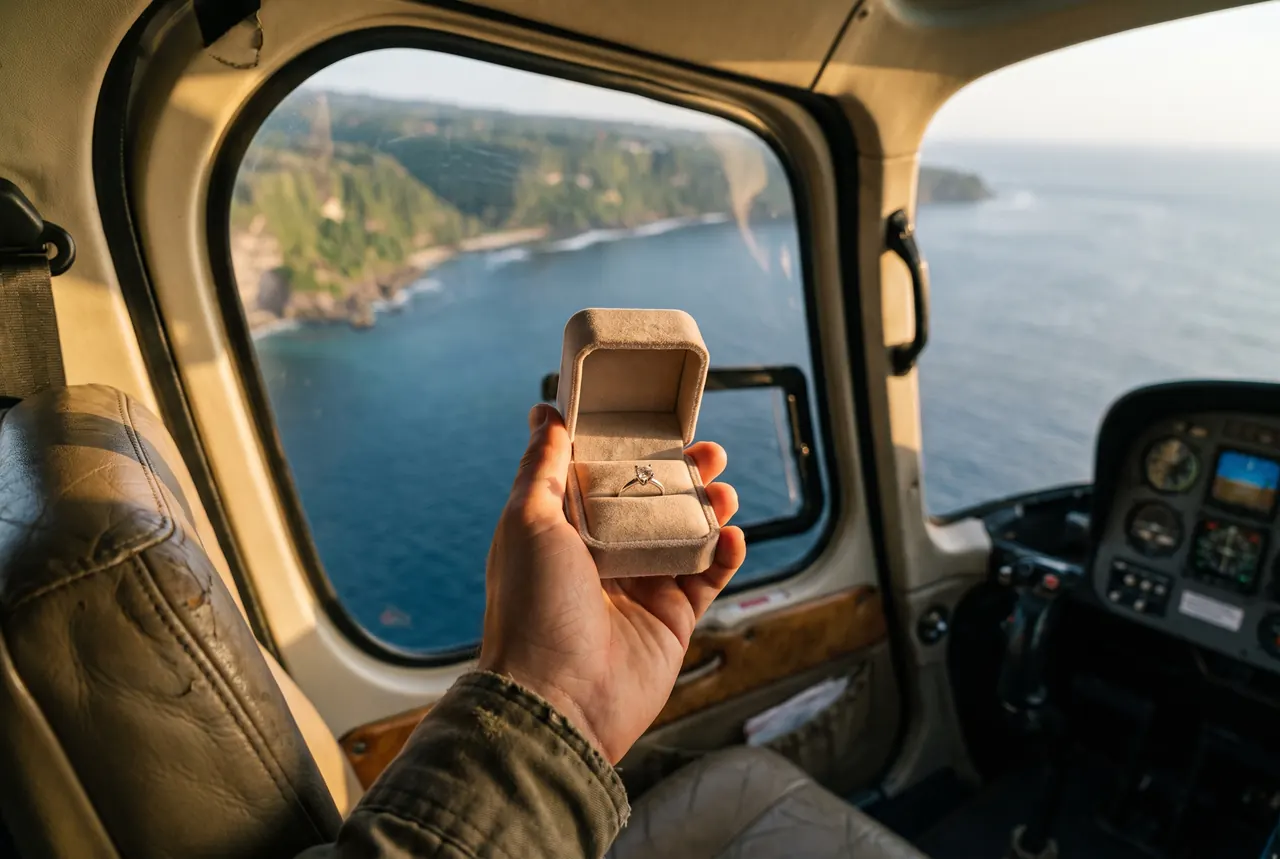
Allow a few days for clearance at a private site. For a styled landing with a set-up and a photographer, plan about a week, as we do for a helicopter proposal. If the date is close, a nearby pad is often faster.
A helicopter is loud on the way in and on the way out. With the engine shut down, the site is quiet again. The rotor wash is the part that surprises hosts: it pushes dust, leaves, sand, cushions and light furniture across the site, and it can move water in a pool.
Plan the timing for daylight only. Flights run from sunrise to sunset and the golden-hour slot ends at sunset, so a landing at 17:30 in June leaves little spare time. The best-time guide shows the sunrise and sunset times.
Send these on WhatsApp. They let us give you a straight answer, and we reply the same day.
General patterns only. Every site is judged on its own photos.
| Area | What tends to help | What tends to block |
|---|---|---|
| Uluwatu and Ungasan | Open clifftop plateaus and large estates | Cliff edges, wind off the sea and some tight compounds |
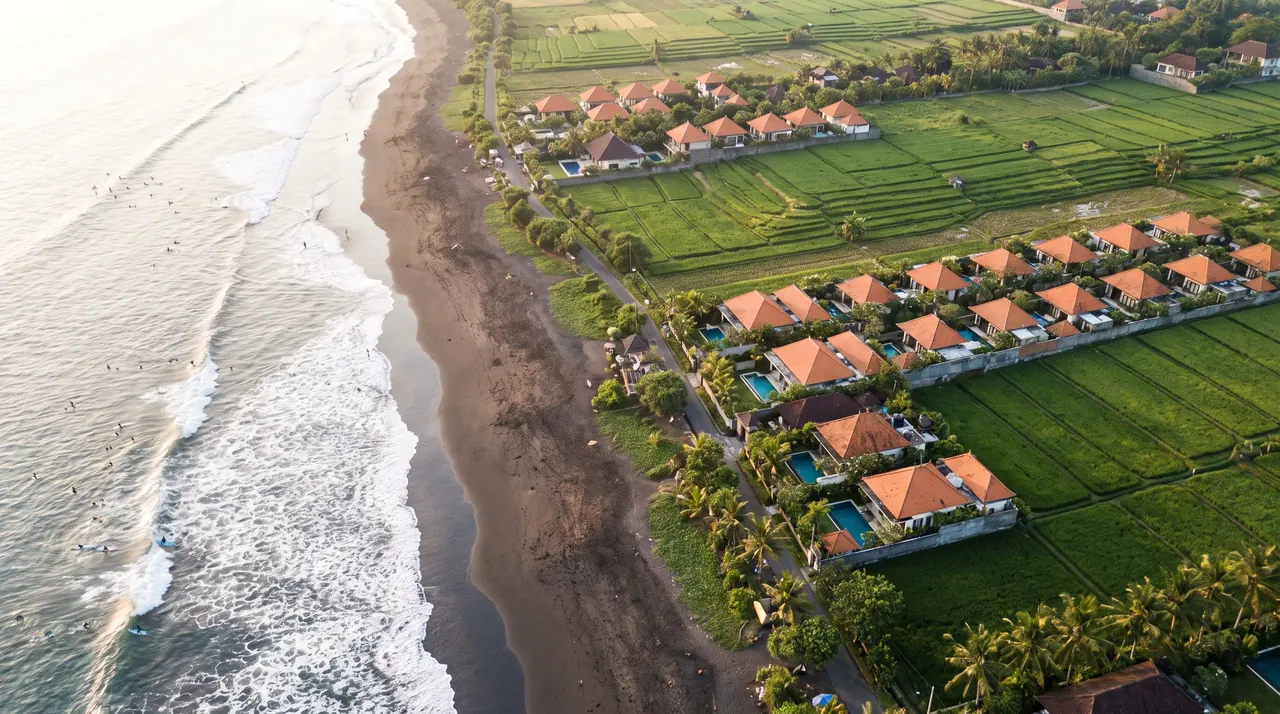
| Canggu | Rice fields and open plots between villas | A field has its own owner, so you need a second consent |
| Seminyak | Occasional large estates or resort grounds | Dense plots, high walls and overhead cables; a clear 25–30 m is rare inside a villa |
| Ubud | Some larger hotel grounds | River gorges, tall trees and terraced slopes limit flat ground |
| Hotels and resorts | Existing helipads or large lawns, if the hotel agrees | Hotel policy and guest noise; ask the hotel first |
The pad nearest to you is written in the quote. For airport pick-ups see the airport helicopter transfer.
A same-day return with a wait adds $300 per hour of standby while the helicopter stays on the ground. The flight itself is priced by minutes and route; the price page explains how.
Use the checklist above. If anything is missing, we tell you straight away.
We compare your photos with the map and pass the file to the licensed operator for clearance.
A conditional yes lists what to change, such as removing furniture or trimming a branch. A no comes with alternatives.
It states the pad, the landing site, the aircraft class and the price. We confirm the exact site before you pay.
A deposit holds the slot. The day before, we check wind and the site again and confirm times.
Yes, if the lawn is flat, roughly 25–30 m across, clear of loose items, with an open path in and out and no overhead lines or tall trees close. The owner must agree and the operator must clear the site. Send a pin and photos so we can check.
As a rule of thumb for a light helicopter, a clear flat area about 25–30 m across. The operator may ask for more room for a larger aircraft or a windy site, and the final decision is theirs.
It depends on the site and on rules that the licensed operator applies. We do not give legal advice. The operator confirms what applies before the quote is final, which is why we ask for the pin, the photos and the owner's contact.
Not on public beaches, in temple grounds or in national parks. A roof usually needs an approved, certified helipad structure. Ask us if you believe your building has one.
Allow a few days for clearance at a private site and about a week for a styled landing with a photographer. Add more time in July, August and the Christmas weeks, when slots and pads fill first.
The flight is priced by route and minutes; see the price page. A styled set-up is $350 and a private car to a nearby pad starts at $50. The quote lists every line before you pay.
Tell us the date, the guests and where you want to land. We reply the same day on WhatsApp with a yes, a conditional yes or a nearby alternative, and a fixed price. Nothing is paid on this site.
Get My Quote on WhatsAppHow landing at a villa or hotel works: the 25–30 m clear area, owner consent, operator clearance, and a nearby pad plus car when the site cannot take one.
The bride and groom arrive by helicopter at the ceremony site, with a photographer on the ground and sparkling wine. Landing site confirmed before you pay.
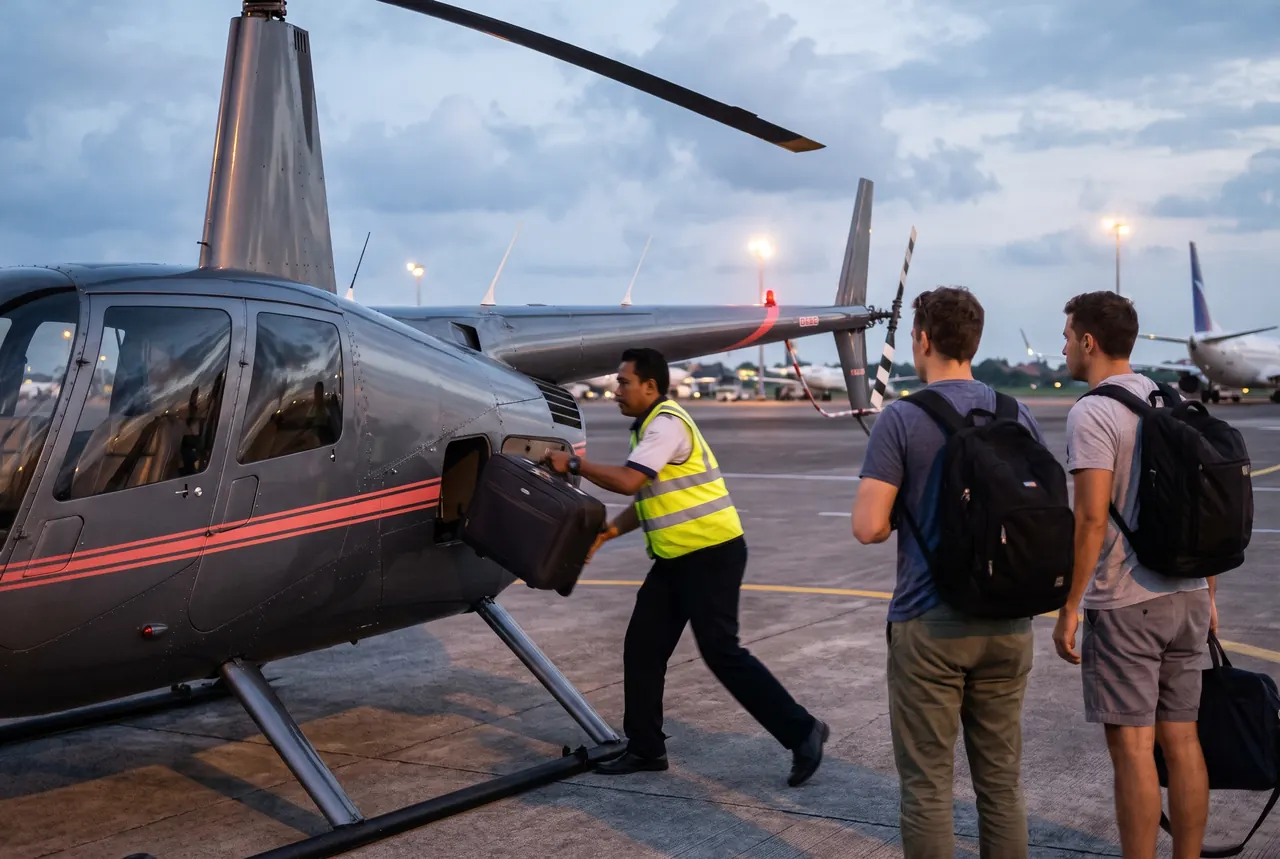
Skip the Bali traffic: a helicopter from the Ngurah Rai area to your villa or resort in Ubud, Uluwatu, Canggu or further.
Six steps, five ideas, a timeline, a checklist and a fix list for the things that go wrong, with packages from the guide price.
Tanah Lot in 7–12 min, Ubud in 11–15 min, Mount Batur in 20–25 min. Flights for Canggu villa guests, priced for the whole helicopter.
Why weight is the limit in Bali heat, how we ask for weights, soft bags only, and what happens if the group is heavy.