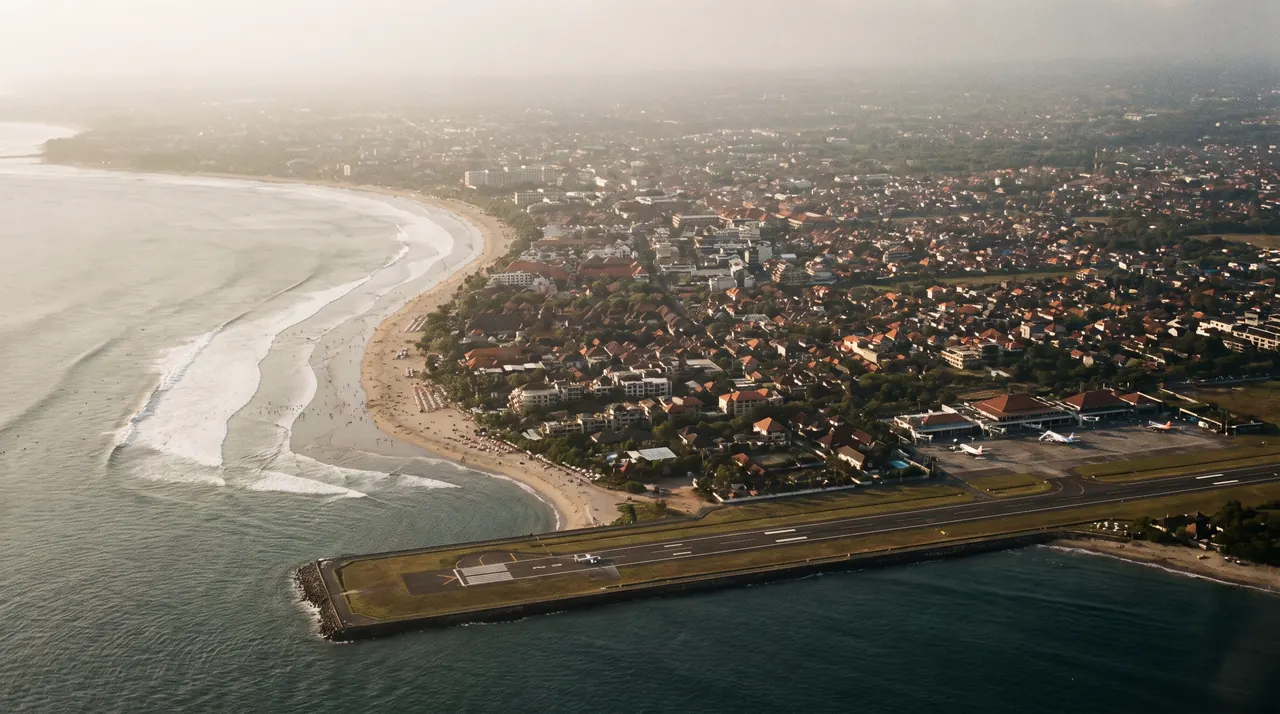
Best Time for a Helicopter Flight in Bali
Which hour, which month and which season suit a Bali helicopter flight, with sunrise, sunset and golden-hour take-off times.
Helicopters fly all year in Bali, and the wet season from November to March is flyable if you plan for it. Book a morning slot between 07:00 and 10:00, choose a coast or terrace route over a volcano, and keep one spare day. Prices do not change: 12 minutes is $450 for the whole helicopter. If the pilot cannot fly safely, we move the flight to the next suitable slot or refund the part not flown. Send your dates and how flexible you are on WhatsApp.
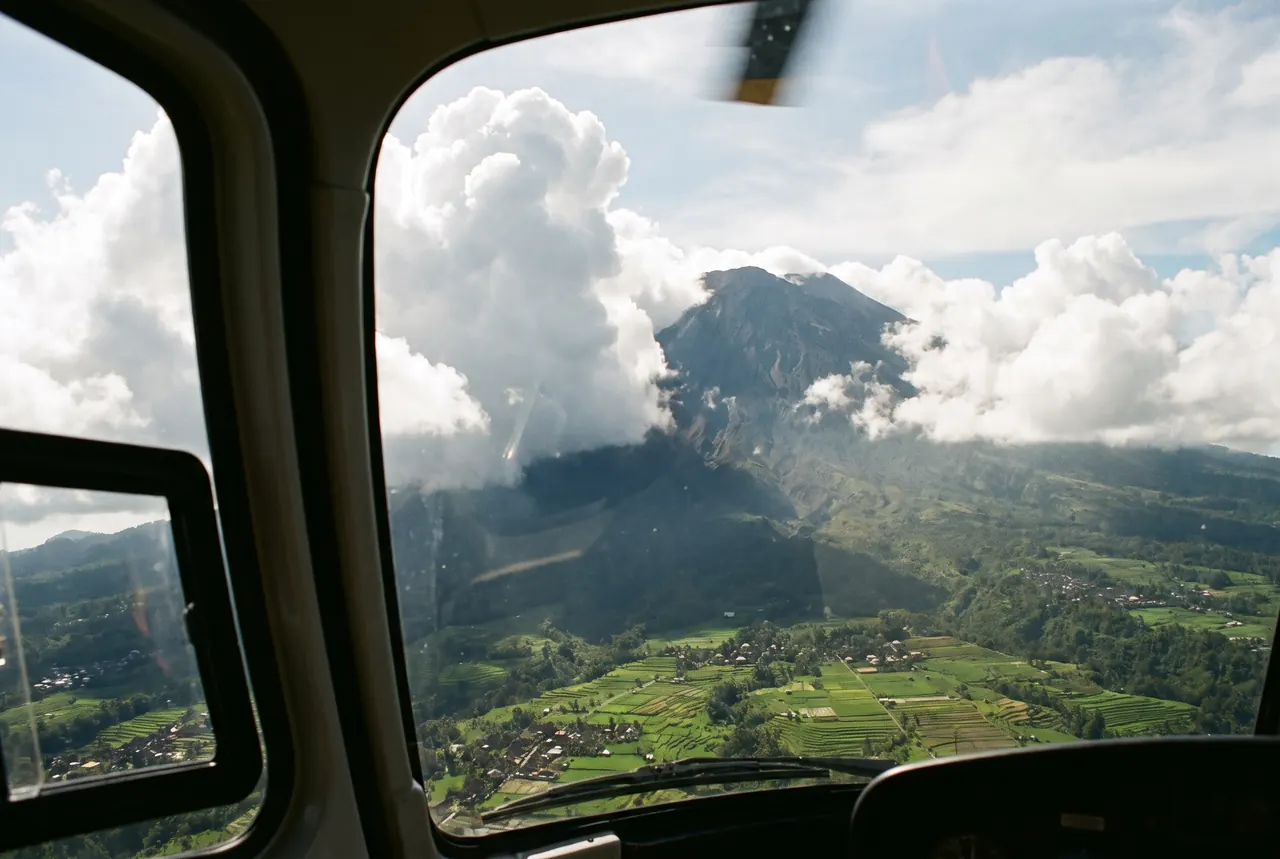
The wet season is not a closed season. From November to March showers cluster in the afternoon, mornings are usually fine, and mountain cloud builds from late morning, earlier on a wet day. Helicopters fly whenever the pilot judges that cloud, visibility and wind are safe, and that happens on most mornings.
Three things stop a wet-season flight. Low cloud hides the ground, and the pilot must see where the aircraft is going. Heavy rain cuts visibility. Strong wind or a squall makes the air rough and the pad unsafe. A morning slot avoids all three more often than any other hour of the day.
The season also has real upsides: green terraces, fuller waterfalls, rain-rinsed air on a clear morning and quieter skies outside the Christmas and New Year weeks. This guide covers the wet season only. For the full-year picture read the best time for a helicopter flight in Bali.
Times are WITA. The pattern is typical, not a forecast, and a single year can differ.
| Slot | Time | What usually happens in the wet season | Our advice |
|---|---|---|---|
| First light | Sunrise to about 07:00 | Calm air, valley mist that can hide the terraces for a while | Good for a coast flight; for Ubud wait until 07:00 |
| Prime morning | 07:00–10:00 | The clearest and calmest window of the day | First choice for every route |
| Late morning | 10:00–12:00 | Cloud builds over the hills and the volcanoes | Fine for the coast; poor for Mount Batur |
| Afternoon | 12:00–about 16:00 | Showers are most likely | Back-up slot only |
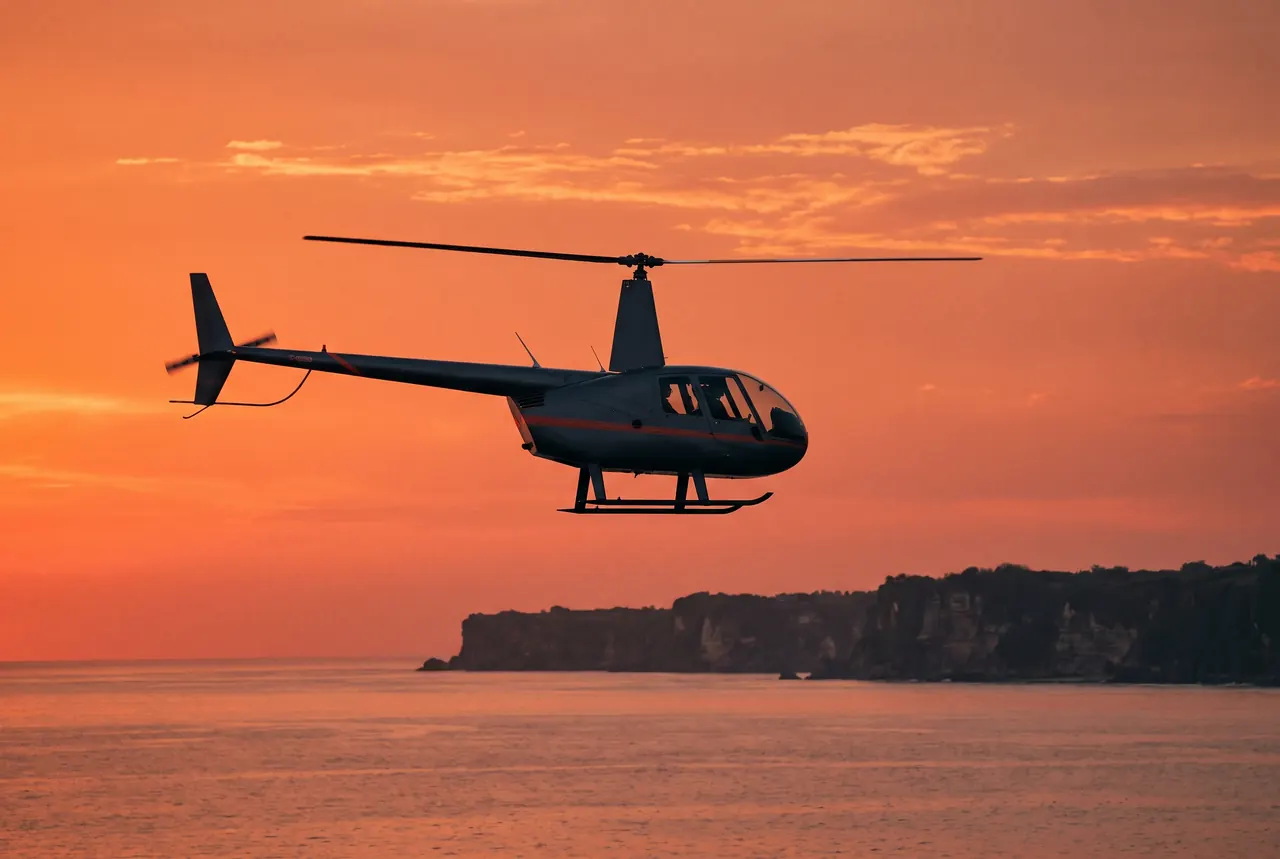
| Golden hour | Take-off 20–30 minutes before sunset | Possible on a clear evening, but cloud can sit on the horizon | Book it with a spare evening or morning; the flight must end at sunset |
Golden hour is covered on the sunset flight page, including how to count back from sunset.
Coast routes need good visibility and moderate wind. Volcano and highland routes need that and a clear summit, which is the harder condition in the wet season.
| Route | Air time | Wet-season fit | Whole helicopter |
|---|---|---|---|
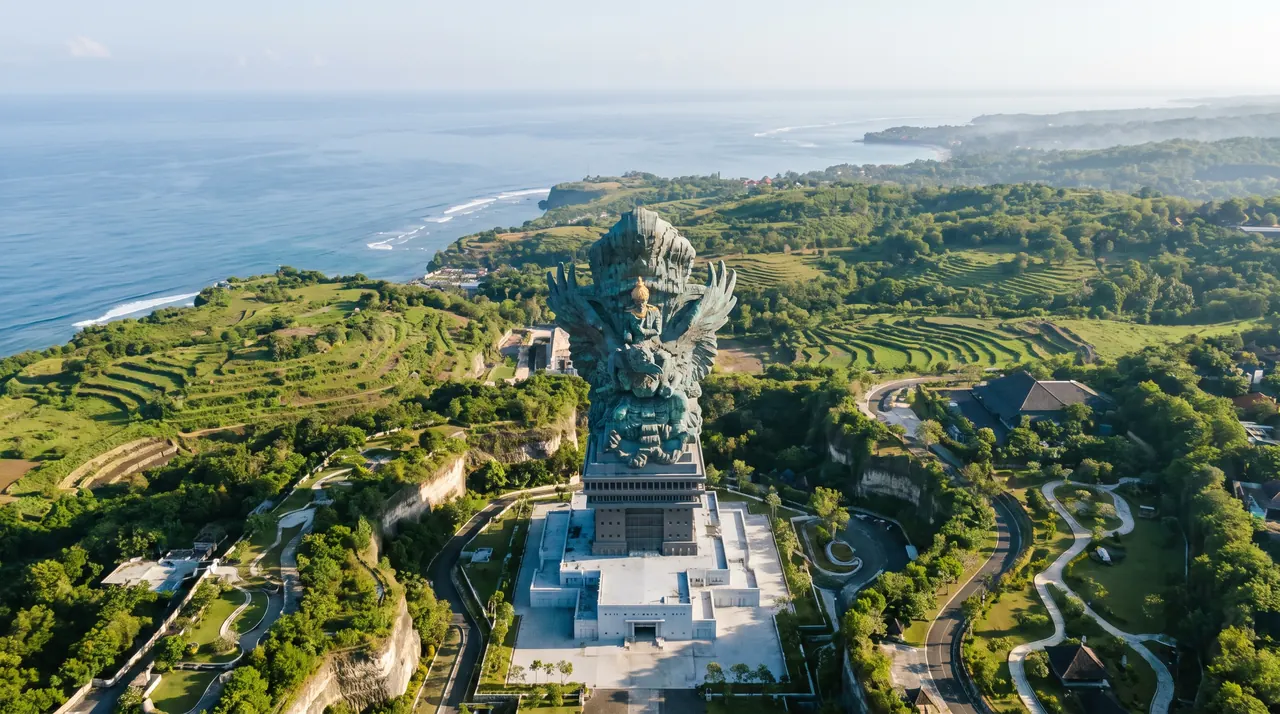
| Bukit cliffs and GWK | 12 min | Good. A short coast flight; a morning slot rarely loses to cloud | $450 |
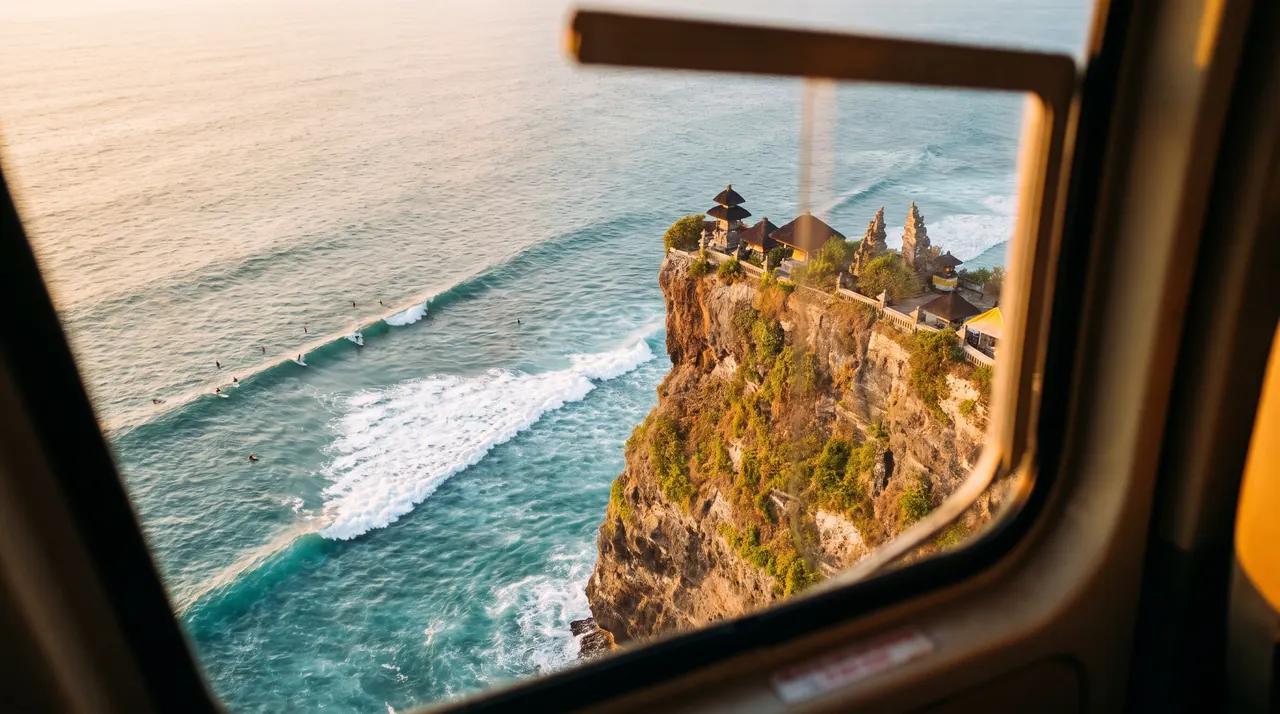
| Uluwatu Temple and the cliffs | 18 min | Good in the morning, and on a clear evening | $650 |
| Tanah Lot and the west coast | 18 min | Good if the wind is light and the sea horizon is clear | $650 |
| Ubud terraces and gorge | 12 min | Fair. Morning only; cloud sits in the gorges earlier on wet days | $500 |
| Nusa Penida cliffs | 30 min | Fair. Morning only; we check the strait and the visibility the day before | $1,150 |
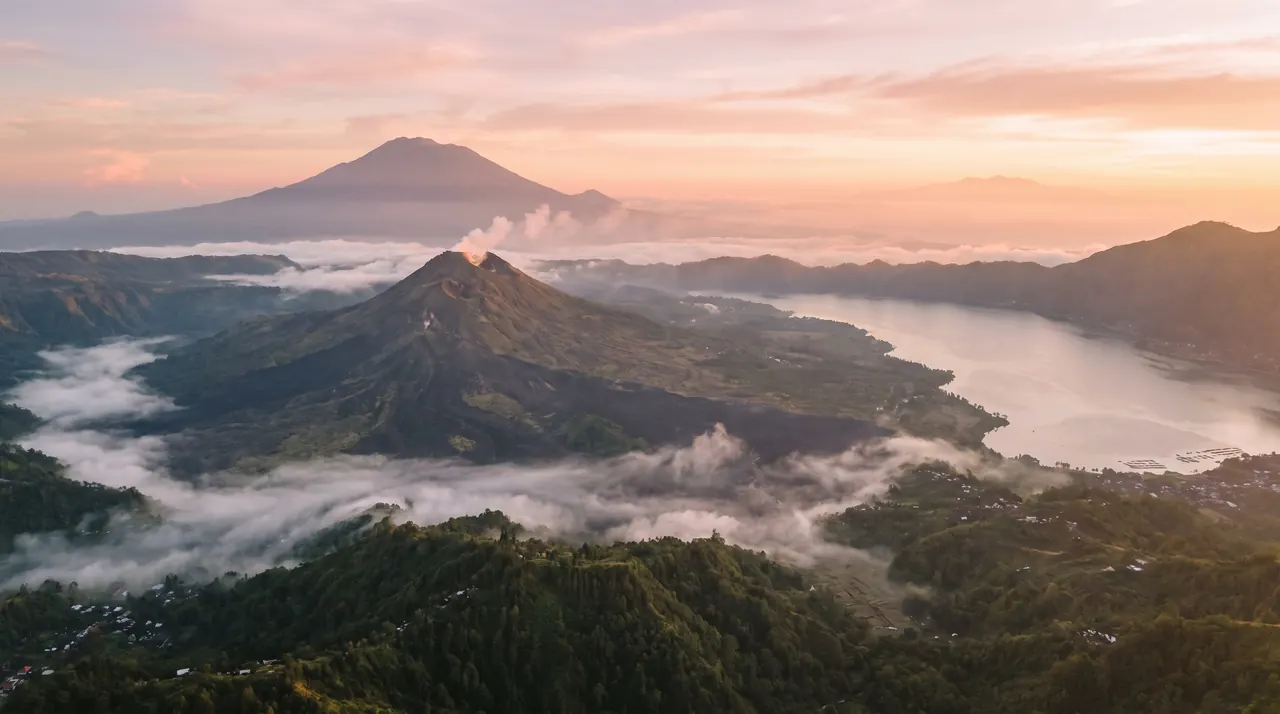
| Mount Batur and Kintamani | 30 min | The hardest: the cone is often in cloud from late morning. Keep two mornings free | $1,150 |
| Bali grand circle | 60 min | Weather-dependent, because it crosses the highlands. Expect route changes on the day | $2,300 |
Guide prices do not change with the season. The price page lists every flight, and the fixed quote for your date comes on WhatsApp.
Mount Batur stands 1,717 m inside its caldera, Mount Agung 3,031 m and Rinjani on Lombok 3,726 m. All three collect cloud as the day warms, and in the wet season they do it earlier and stay covered longer. A volcano flight at 07:00 has far better odds than one at 11:00, and the second morning has better odds again if the first is lost.
If the volcano is the reason you are flying, book the first slot of the day, keep a second morning free and tell us the earliest date you can use. If the volcano is only one item on a long wish list, pick the coast. A clear Uluwatu cliff beats a Batur cone you cannot see. Volcano alerts for Agung, Batur or Rinjani can also change a route; see volcano flights and ash advisories.
A generic pattern for planning. It is not a forecast, and the weather in any one year can differ.
| Month | What to expect | Planning tip |
|---|---|---|
| November | The wet season begins. Showers become more frequent through the month; mornings are usually fine. Fewer visitors than in the dry-season peak | Two or three days' notice is often enough. Keep one spare day |
| December | Wetter. Christmas and New Year bring peak demand for flights and hotels | Book ten to fourteen days ahead and accept a flexible hour |
| January | Showers can be frequent and cloud lower. Mornings remain the best chance | Offer two mornings in a row, especially for volcano routes |
| February | Still wet, and generally quieter | A spare day and a coast-first route |
| March | Showers ease toward the dry season. Nyepi, the Day of Silence, usually falls in March | Check the Balinese calendar first; see Nyepi and flying |
April to October is the dry season, with the clearest air. The wet-season weeks that do book out are the Christmas and New Year weeks.
A buffer is the single best protection against rain. Build it into the plan, not into your hopes:
Ask every operator for this wording before you pay, and keep it with the quote.
The rice fields around Tegalalang and Jatiluwih are at their greenest when the water is in. Jatiluwih is a UNESCO World Heritage cultural landscape; the grand circle passes through the highlands.
Outside the Christmas and New Year weeks there are fewer visitors in the queue, so slots are easier to find at short notice.
A clear morning after a wet night can show long views and sharp colour. The key word is can: plan for the flight to move if it does not.
Light rain is not the issue. Heavy rain, low cloud or strong wind are, because the pilot needs to see the ground and the air must be safe. The pilot decides on the day, and a morning slot gives the best chance.
Between 07:00 and 10:00. Showers cluster in the afternoon, and mountain cloud builds from late morning, earlier on wet days. A 12-minute morning flight starts at $450 for the whole helicopter.
The pilot makes the call. We move the flight to the next suitable slot or refund the part that was not flown. The wording comes with the quote, so ask for it before you pay.
The coast. The Bukit and Uluwatu flights and the Tanah Lot flight depend on visibility and wind, not on a clear summit. Ubud works in the morning. Mount Batur is the hardest, so keep two mornings free.
No. The wet season does not change the guide prices: $650 for 18 minutes and $1,150 for 30. Only peak weeks over Christmas and New Year and golden-hour slots can add a premium, and a bad-weather day is rescheduled or refunded rather than repriced.
One spare day for a coast flight and two for a volcano flight. Fly in the first third of your trip, and do not set the flight on your last day or before a connection.
Tell us the dates, how many days you can move, how many guests and what you want to see. We reply the same day with the slot, the aircraft and a fixed price. Nothing is paid on this site.
Get My Quote on WhatsAppWhich hour, which month and which season suit a Bali helicopter flight, with sunrise, sunset and golden-hour take-off times.
The shortest scenic flight: the GWK statue, the white Pandawa and Melasti cliffs and Uluwatu Temple on its sea cliff, in one 12-minute loop.
18 minutes along the Bukit cliffs: Uluwatu Temple, the Suluban and Padang Padang surf breaks, Bingin and Balangan, then Jimbaran Bay.
How Agung, Batur and Rinjani alert levels and ash advisories change helicopter routes, and what we do when a level moves.
A golden-hour flight over the Bukit cliffs that lands at sunset. 18 or 30 minutes, whole helicopter, up to 4 guests.
The airport closes for about 24 hours and no sightseeing flights run. How to plan arrival, departure and flights around Nyepi, and what to book instead.